
- TCM Raw Herbal Powder
Whole herb,
No solvent.
True compound profile.
Dao-Di authenticated, CP 2020 compliant raw herbal powder in 60–500 mesh. Every lot undergoes microscopic species authentication before release. The extract-free format trusted by TCM practitioners, THMPD registrants, and functional food formulators worldwide.
60–500
Mesh range available
0%
Solvent residue
CP 2020
Every parameter
Micro.
Species ID verified
Available Mesh Specifications
60 – 200 mesh · Custom particle size on request
Coarse Powder:60–100 mesh
Particle size verified by standard pharmacopeial sieve analysis on every batch. Accurate mesh distribution and guaranteed pass-rates are reported on your CoA to ensure seamless formulation consistency.
From Dao-Di field to finished powder — Eight verified steps.
Every kilogram of raw herb powder passes through the same Eight-stage process. Two independent QC gates — one before processing begins, one before the powder is released — mean no out-of-specification batch ever reaches packaging.
We apply two binding criteria
before a single kilogram
enters our facility.
Most suppliers in China source on the commodity spot market — price on the day. We don’t. Our procurement enforces two independent standards that must be satisfied simultaneously. Neither alone is sufficient.
01
Only geo-authenticated botanical material from recognized Dao-Di origins accepted
“Dao-Di” is the Chinese pharmacological designation for geo-authentic medicinal plants — botanical material whose active compound concentration is directly tied to the specific geography, altitude, climate, and soil conditions of its origin. This concept has been documented in classical materia medica for over 1,500 years and is formally recognized in the Chinese Pharmacopoeia (CP 2020) as a quality-determining criterion.
The same medicinal plant species from different origins can vary in active compound concentration by 30–50% or more. For each botanical material we source, we lock in its nationally recognized Dao-Di origin and accept no “equivalent” substitutes, regardless of price advantage.
Verified Botanical Source
Each raw material must match the declared botanical species, plant part, and origin information. Supplier declarations are reviewed together with incoming inspection records to reduce the risk of substitution, adulteration, or mixed-origin material.
Documented Origin Per Incoming Lot
Every incoming lot is accompanied by supplier documentation, including origin information, harvest or collection records where applicable, and batch traceability documents. These records are archived and can be provided to customers upon request.
Harvest And Post-Harvest Control
Harvest season, plant maturity, drying method, storage condition, and transportation process are reviewed as part of incoming material evaluation. Materials showing signs of mildew, improper drying, abnormal odor, visible contamination, or poor storage are rejected.
Approved Supplier And Producing Area
We work with qualified suppliers and stable producing areas to reduce raw material variability. Supplier performance is evaluated continuously based on origin consistency, documentation reliability, incoming test results, and long-term batch stability.
02
Chinese Pharmacopoeia (CP 2020) · Every parameter, every batch
The Chinese Pharmacopoeia (CP 2020) establishes legally binding quality standards for all listed medicinal materials, specifying minimum active compound content, heavy metal limits, pesticide residue thresholds, and authentication requirements by thin-layer chromatography.
We treat the pharmacopoeia standard as the floor, not the ceiling: our internal incoming material specifications for key markers are set above the pharmacopoeia minimum to provide a buffer against batch-to-batch variability. Any batch meeting origin requirements but failing any pharmacopoeia parameter is rejected without exception. There is no commercial override for out-of-specification incoming material.
TLC species authentication — every incoming lot
Thin-layer chromatography fingerprint comparison against CP 2020 reference standard. Confirms botanical identity and rules out adulteration with related Forsythia species or unrelated substitutes before acceptance.
Rigorous Macroscopic Sorting & Cleaning
Before processing, all raw herbs undergo comprehensive visual inspections. We strictly screen for and remove foreign matter, substandard pieces, and soil residues, ensuring only premium-grade materials enter our warehouse.
Active Marker Or Assay Testing
Key active markers or characteristic compounds are tested by HPLC, UV, TLC, or other validated methods depending on the botanical material and product specification. Internal acceptance limits are set to support stable extract potency and consistent finished-product performance.
Physical Condition & Milling Readiness
Before any material is cleared for custom milling, we evaluate its physical condition, drying state, and structural integrity. This ensures the raw herb is perfectly conditioned to achieve your exact mesh specifications and optimal flowability.
Microscopic identification
—
the CP 2020 standard for raw powder.
Chemical fingerprinting methods work best on extracts, where compound concentration is high. For raw powder — where the plant matrix is intact — microscopic identification is the definitive authentication method. It examines the actual cellular structures of the herb, not just its chemical output.
Every production lot of raw powder undergoes full microscopic identification before release. This is not a sampling exercise — it is a hard stop in the release process.
Powder preparation and slide mounting
A representative sample from the production lot is cleared with chloral hydrate, mounted on a microscope slide, and stained with reagents appropriate for the specific herb species to enhance visibility of diagnostic structures.
Examination under CP 2020 reference
Structures observed under 100× and 400× magnification are compared against the CP 2020 microscopy reference for the species. Specific diagnostic criteria — starch grain morphology, calcium oxalate crystal form, vessel wall patterning, fibre dimensions — are verified.
Documentation in the batch record
Microscopy findings are documented in the batch production record with photomicrograph reference. Available to buyers as part of the full batch documentation package under NDA.
Release or rejection
Any lot where microscopic findings deviate from species-specific reference criteria — indicating wrong species, admixture, or significant adulteration — is rejected before milling begins. No partial release.
Species-specific cellular structures invisible to chemical tests
Microscopic authentication identifies structures that are genetically determined — they cannot be replicated by chemical adulteration. A substitute species will show different starch grain shapes, crystal forms, or vessel types regardless of what compounds are added to it.
Starch granules
Shape, hilum position, and lamellation are species-specific
Ca-oxalate crystals
Prism, rosette, needle (raphide), or druse forms vary by species
Ca-oxalate crystals
Spiral, reticulate, pitted, or annular — genus and species specific
Ca-oxalate crystals
Pericyclic, bast, or wood fibres with distinctive wall thickness
Recognised by European Pharmacopoeia — supports EU registration
Microscopic identification is a standard authentication method in the European Pharmacopoeia (Ph. Eur. 2.8.23) as well as CP 2020. For traditional herbal medicinal products (THMPs) seeking EU registration under Directive 2004/24/EC, microscopy-authenticated raw powder is the format most directly supported by established monograph data — reducing the analytical burden in the registration package.
Chemical test alone
Can be matched by adding isolated compounds to substitute material. Cannot distinguish correct species from adulterant with added marker compound.
Microscopy + Chemical
Cellular structure confirms species identity independently of chemical content. Adulterant species shows wrong structures regardless of chemistry.
Three precision grades.
Engineered for every application.
Mesh size determines far more than just texture — it dictates the dissolution rate of active compounds, the flowability through high-speed capsule-filling equipment, and the tactile feel in topical cosmetics. We custom-mill to match your exact manufacturing process.
Our Coarse Grade (60–80 mesh) retains the optimal structural integrity required for herbal tea blends, direct tableting, and veterinary premixes. At the other end of the spectrum, our Ultra-Fine Grade (300–500 mesh) undergoes advanced milling to achieve a 25 μm particle size — delivering a silken smoothness essential for premium cosmetic and pharmaceutical bases.
| Mesh Range | PARTICLE SIZE | Primary Applications |
|---|---|---|
|
60–100
mesh |
180–250 μm |
Herbal tea blending · Tablet direct compression · Veterinary feed premix |
|
100–200
mesh |
75–150 μm |
Standard capsule filling · Sachet / stick packs · Functional food ingredients |
|
300–500 mesh |
25–50 μm |
Face mask powder · Topical cream / lotion base · Pharmaceutical excipient |
Three formats. Same QC. Every size.
Whether you need 100 g for formulation development or 25 kg for commercial production, every order ships with an identical full CoA — microscopic identification result,sieve pass-rate, heavy metals, pesticide screen, and moisture content. No separate documentation charge for any order size.
Custom packaging available: Private label, custom fill weights, specific pouch formats (stand-up, zip-lock, vacuum-sealed), and bespoke outer carton labelling are all available from 25 kg MOQ. Provide your label artwork or brief and we will produce a pre-production sample before any commercial commitment.
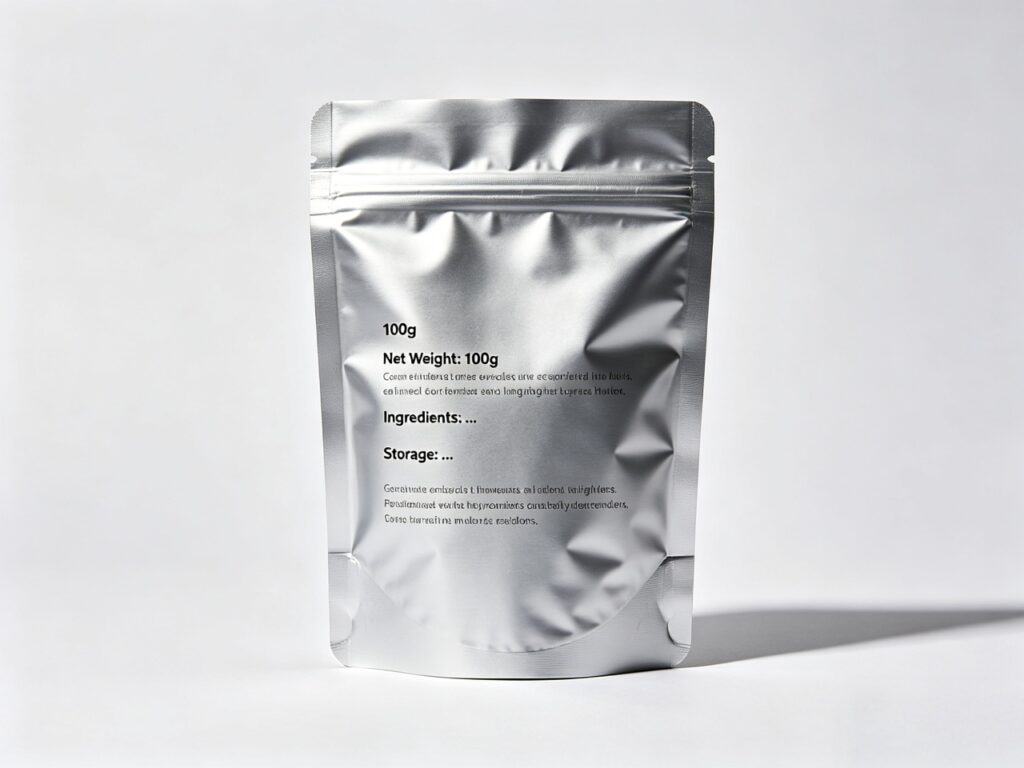
100g / 250 g / 500 g
Ideal for precise daily batching or direct retail distribution. We can sub-package your bulk order into ready-to-use small foil pouches. This eliminates the need for you to repeatedly open large drums, preventing moisture exposure and cross-contamination in your facility.
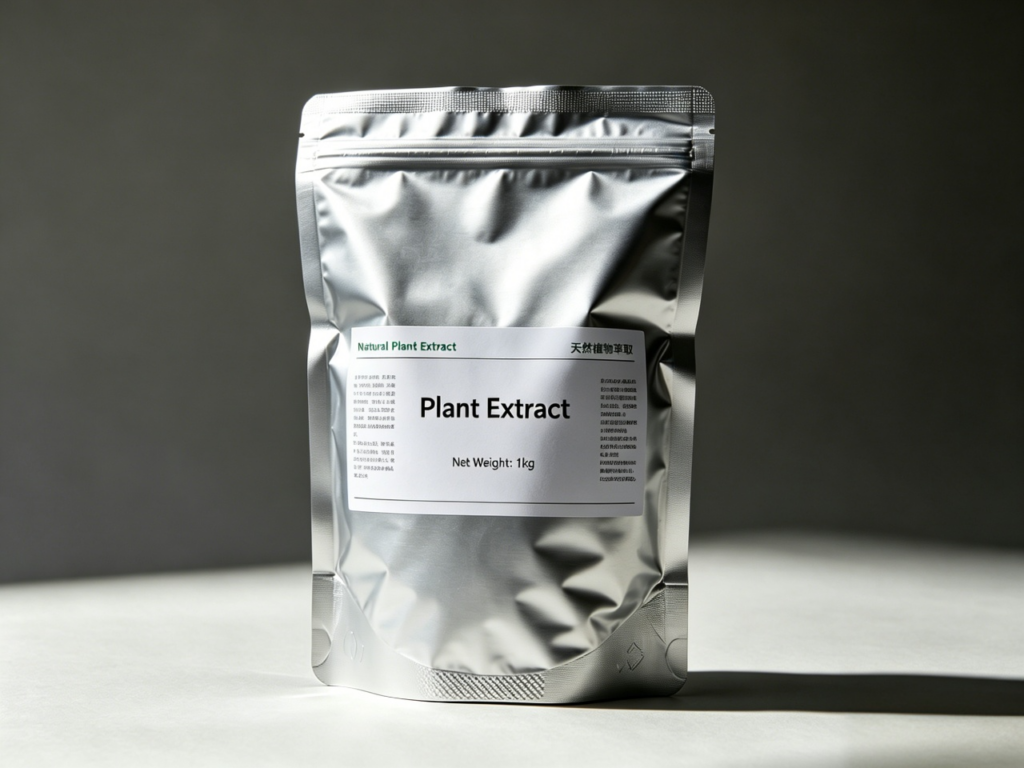
1 kg / 5 kg
Ordering 100kg but need it in 1kg bags? No problem. Our tailored sub-packaging service breaks down commercial volumes into manageable units. Each bag is individually heat-sealed and labeled, streamlining your inventory management and internal material handling.
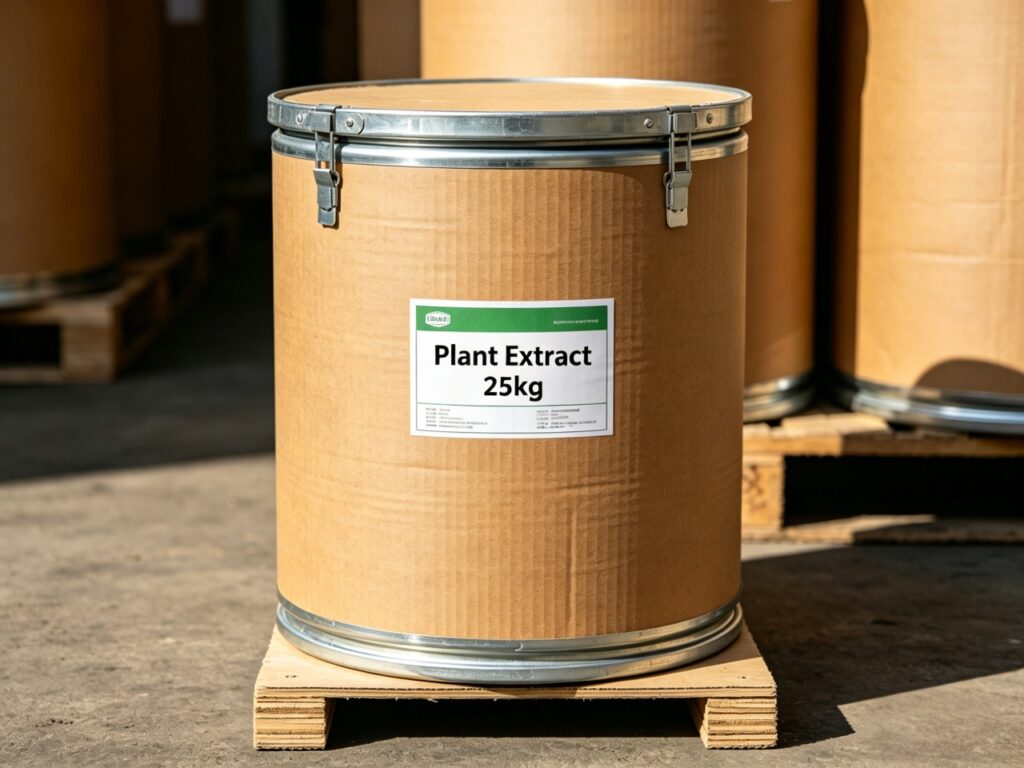
25kg Standard commercial quantity
Our standard industrial packaging for maximum cost-efficiency. 25kg net weight in double PE-lined fiber drums or heavy-duty foil bags. Engineered for maximum protection against moisture and oxidation during global sea or air freight.
- Raw Botanical Herb Powder
Need a different size, label, or format?
We provide comprehensive OEM & custom packaging.
Private label, custom fill weights (50 g to 5 kg+), vacuum-sealed pouches, and stand-up zip bags are available. For larger commercial orders, we also offer bespoke label design and custom outer carton printing. Provide your brief and we will work out a tailored packaging solution for your brand.
Who uses TCM raw powder
internationally — and why.
Raw powder occupies a distinct position from botanical extract in international markets. No concentration ratio uncertainty. No solvent residue. The whole-herb chemical profile — including fibre matrix, co-occurring minor compounds, and volatile fractions — is preserved intact. Here are the six primary international use cases.
EU Traditional Herbal Products (THMPD)
European Union · Directive 2004/24/EC
EU traditional herbal medicinal product registration requires demonstrating 30 years of traditional use (15 in the EU). Raw powder dosage forms — capsules, powders, teas — are most directly supported by existing CP 2020 and Ph. Eur. monograph data. Microscopy authentication provides the identity documentation required in CTD Module 3.
US Dietary Supplements (DSHEA)
United States · FDA 21 CFR Part 111
DSHEA classifies raw botanical powder as a dietary ingredient with established status for most TCM herbs. Our CoA documentation — HPLC active marker, heavy metals, pesticide residues, microbiology, and microscopy identity — fulfils the identity and purity substantiation requirements of FDA 21 CFR Part 111 GMP for dietary supplements.
Cosmetic & Skincare Formulation
EU Cosmetics Reg. 1223/2009 · ISO 22716
Ultra-fine botanical powders (300–500 mesh) are used as active ingredients in face masks, serums, and pressed compacts. EU Cosmetics Regulation 1223/2009 lists most TCM botanicals in CosIng. Our cosmetic-grade raw powder meets the solvent residue, microbiological, and heavy metal standards required for leave-on and rinse-off formulations.
Veterinary Feed Supplement
EU Reg. (EC) 767/2009 · USA CVM
TCM raw powder is classifiable as a botanical feed material under EU Regulation 767/2009 without the regulatory burden of novel feed additive authorization. Coarser grades (60–100 mesh) blend directly into pelleted feed. Our veterinary-grade powder meets the microbiological and contamination standards required for direct animal consumption.
TCM Practitioners & Compounding Pharmacies
Global · Registered TCM clinics
Licensed TCM practitioners in the EU, Australia, Canada, and Southeast Asia compound personalised formulas using standardised raw powder at defined mesh grades. 100-mesh is the most common standard for compound prescription powders. Microscopic identity documentation supports practitioner licensing compliance requirements in regulated TCM markets.
Functional Food & Beverage Ingredients
EU Novel Food · US GRAS · APAC
Many TCM botanicals have established food use status in the EU and US (ginger, turmeric, licorice, schisandra, goji). Fine powder (200 mesh) incorporates into instant beverages, functional snacks, and fortified foods without visible particulate. Our food-grade powder carries full allergen declarations, non-GMO statements, and relevant country-of-origin traceability for food label compliance.
What raw botanical powder buyers typically encounter
Buyers often receive pre-ground powders that have been sitting in warehouse storage for months, leading to severe oxidation and degraded bioactivity. Particle (mesh) sizes drift unexpectedly between batches, causing costly formulation and encapsulation failures. And when identity or heavy metal tests fail, you’re left negotiating with a broker who has zero control over the actual supply chain.
We’ve mapped the most common failure points in the raw herb market — and the specific Dao-Di sourcing and custom-milling decisions we’ve implemented to engineer each one out.
- Typical Market Problems
Price-driven, indiscriminate sourcing
Many suppliers buy the cheapest available herbs from mixed wholesale markets. They ignore the plant's geographical origin, altitude, and harvest timing, resulting in powders with highly unstable efficacy.
Masking defects through milling
To maximize profit margins, unscrupulous brokers often mill low-grade, moldy, or pest-damaged herbs. Once ground into a fine powder, these severe physical defects are completely hidden from the buyer.
"Looks right, must be right" guesswork
The market is flooded with adulterated powders mixed with related-species or dead-weight fillers. Generic suppliers lack the laboratory equipment to verify if the powder actually contains the correct plant DNA and active compounds.
Inconsistent particle size distribution
Using outdated grinding equipment leads to uneven powders with extreme particle size variations. This causes severe flowability, solubility, and mixing issues when buyers try to integrate the powder into their final formulations.
Rigid, poorly sealed packaging
Standard, flimsy packaging offers poor moisture barriers. During long, humid ocean transits, powders often absorb moisture, leading to severe caking and oxidation by the time they arrive at the buyer's warehouse.
- Our Solution
Authentic Dao-Di Sourcing
We refuse to source based on the lowest price. We procure raw materials directly from authentic, native growing regions (Dao-Di). By controlling the specific harvest window and soil conditions, we secure the highest baseline of biological activity.
Zero-Tolerance Defect Screening
Quality cannot be milled into a bad plant. Before any grinding occurs, our procurement team conducts rigorous macroscopic screening. We categorically reject any raw herbs exhibiting mold, pest damage, or improper drying.
TLC & Quantitative Verification
We don’t guess; we test. Every batch must pass Thin-Layer Chromatography (TLC) and microscopic identification for absolute species authenticity. We then conduct quantitative analysis to guarantee the required density of active compounds.
Precision Milling (60–500 Mesh)
Our facility utilizes advanced milling technology to deliver exact, uniform particle sizes tailored to your needs (e.g., precise 60–500 mesh distributions). This guarantees perfect homogeneity and flawless performance in your production line.
Customized, Climate-Secure Packaging
We protect your investment. We offer highly flexible, customized packaging solutions—from double-lined bulk drums to specialized moisture-barrier bags. Your powder is packed securely to survive global transit without clumping or degrading.
30+ premium botanicals
Custom milled to 60–500 mesh.
All species are strictly sourced from their recognized Dao-Di origins and authenticated via Pharmacopoeia-compliant microscopic identification. The 60–500 mesh range serves as our standard reference guide. To preserve peak bioactivity, all botanical powders are freshly milled to your exact formulation requirements upon order. Contact us for species not listed — our procurement network covers the complete materia medica catalogue.
Astragalus Root
Astragalus membranaceus
100–200 mesh
Danshen Root
Salvia miltiorrhiza
100–200 mesh
Goji Berry
Lycium barbarum
80–200 mesh
Schisandra Berry
Schisandra chinensis
100–200 mesh
Licorice Root
100–200 mesh
Angelica Root
Angelica sinensis
100–200 mesh
Chinese Skullcap
Scutellaria baicalensis
100–325 mesh
Forsythia Fruit
Forsythia suspensa
100–200 mesh
Isatis Root
Isatis indigotica
80–200 mesh
Dandelion Herb
Taraxacum mongolicum
100–200 mesh
Reishi Mushroom
Ganoderma lucidum
200–400 mesh
Chuanxiong Rhizome
Ligusticum chuanxiong
100–200 mesh
Cinnamon Bark
Cinnamomum cassia
80–200 mesh
Peppermint Herb
Mentha haplocalyx
60–100 mesh
Chrysanthemum Flower
Chrysanthemum morifolium
60–100 mesh
Honeysuckle Flower
Lonicera japonica
100–200 mesh
Not "GMP-compliant."
GMP-certified.
Auditable at any moment.
Many suppliers treat raw powders as an afterthought. We apply the same rigorous pharmaceutical-grade quality system to our raw botanical powders as we do our flagship extracts. From fresh custom-milling to Pharmacopoeia-compliant microscopic identification, we deliver uncompromised purity backed by actual-value reporting.
In-House Analytical Laboratory
Microscopic identification, active marker profiling (HPLC) are conducted strictly on our own instruments. No outsourcing for primary release tests.
24-Month Batch Retention
Physical samples of every raw powder batch are securely retained in climate-controlled storage for 24 months, fully supporting your long-term quality audits.
100% Documented Traceability
Every processing step from raw herb intake to final milling is meticulously logged, guaranteeing absolute traceability from exact cultivation origin to export-grade powder.
GMP Certification
NMPA · Multi-grade facility · All four application grades
HACCP
Global food & feed safety compliance
ISO 2200:2018
Certified food safety & supply chain traceability
ISO 9001:2015
Quality Management System · External annual audit
CP 2020 Compliance
Chinese Pharmacopoeia 2020 · All extract grades
In-House Lab
Independent HPLC/AAS testing.
24-Month Retained Sample & Stability Programme
Every batch across all four grades is enrolled in our 24-month stability programme using dedicated stability test chambers. Real-time and accelerated testing at 6 checkpoints provide formal reports for regulatory dossier submission.
Tell us what
you need.
We'll take it from there.
Whether you need an in-stock grade, a custom specification, regulatory documentation, or a facility audit — the right person on our team will respond within one business day.
Request a Free 20-100g Sample
Any product. Any grade. Worldwide express dispatch within 48 hours.
Request a Bulk Pricing Quote
Get transparent, tier-based pricing for standard extracts or custom formulations. Includes CIF/FOB freight estimates. Fast response within 12 hours.
Submit a Custom Formulation Brief
New botanical, new grade, or compound formula — free feasibility assessment within 48 hours.
Schedule a Factory Audit or Technical Call
Speak directly with our commercial directors or arrange a virtual tour of our Lushi extraction facility. No scripts, just solutions.
All enquiries confidential · NDA available on request · No unsolicited follow-up · One business day response guaranteed
Send us a message
We reply within 1 business day with pricing, lead time, and sample tracking number.